
Call Today For A Free Estimate!

A Small Company With a BIG Reputation Serving Hudson County for 40+ Years


Quality Is Not Expensive. It's Priceless!


TPO Roofing Systems in Jersey City & Hudson County, NJ
Reflective Single-Ply Roofing with Heat-Welded Seams

TPO is a single-ply roofing membrane commonly used on commercial, multifamily and residential low-slope roofs.
Known for its heat-welded seams and reflective membrane options, TPO can provide an effective roofing solution when the complete roof assembly is properly designed and installed.
At Elite Roofing, we install, replace, repair and maintain TPO roofing systems throughout Jersey City and Hudson County. We evaluate the existing roof, deck, insulation, drainage, penetrations, flashings and perimeter conditions before determining whether TPO is appropriate for the property.
Not sure TPO is right for your building? → Compare All Flat Roofing Systems
TPO Roofing at a Glance
THERMOPLASTIC MEMBRANE
A reinforced single-ply roofing membrane designed for low-slope roof applications.
HEAT-WELDED SEAMS
TPO membrane seams are joined using controlled heat to create welded membrane connections.
REFLECTIVE OPTIONS
White TPO is highly reflective, while additional membrane colors and configurations are also available.
MULTIPLE THICKNESSES
Common TPO products are available in several membrane thicknesses, including 45, 60 and 80 mil depending on manufacturer and system.
MULTIPLE ASSEMBLIES
TPO can be incorporated into fully adhered, mechanically attached and other manufacturer-approved roofing assemblies.
LOW-SLOPE APPLICATIONS
Commonly used on commercial, multifamily, institutional and other low-slope buildings.
What Is a TPO Roofing System?
TPO stands for thermoplastic polyolefin. It is a single-ply roofing membrane used primarily on low-slope roofing systems.
Unlike EPDM, which is a thermoset rubber membrane whose field seams are typically joined with compatible tapes and adhesives, TPO is thermoplastic. This allows compatible TPO membrane sections and details to be joined using heat-welding equipment.
A typical reinforced TPO membrane contains reinforcing scrim within the membrane construction. The membrane itself is only the visible weathering layer of a larger roofing assembly.
A TPO roof may include:
Roof Deck → Insulation → Cover Board, Where Specified → TPO Membrane → Heat-Welded Seams → Flashings & Perimeter Details
The appropriate assembly varies according to the building, substrate, insulation requirements, drainage, attachment method, manufacturer specifications and project conditions.
What’s Under a TPO Roof?
The white membrane visible from above is only one component of a TPO roofing system. Long-term roof performance depends on the complete assembly beneath the membrane and the way drains, walls, penetrations, equipment and perimeter conditions are detailed.
A TPO roof should be evaluated as a complete roofing system. Installing a new membrane alone does not automatically correct deteriorated decking, wet insulation, inadequate drainage or failing flashing conditions.
Understanding TPO Membrane Thickness
TPO roofing membranes are manufactured in different thicknesses. Common standard TPO products are available in 45, 60 and 80 mil configurations, although available thicknesses vary by manufacturer and product line.
45 MIL
0.045 inches nominal thickness
60 MIL
0.060 inches nominal thickness
80 MIL
0.080 inches nominal thickness
A thicker membrane provides more membrane material, but thickness should not be treated as the only measure of roof quality or expected performance.
The appropriate membrane specification depends on factors such as the roof assembly, building use, expected rooftop traffic, manufacturer requirements, warranty requirements, attachment method and project goals.
Important: Membrane thickness alone does not determine how long a TPO roof will last. Installation quality, seam welding, drainage, flashing details, substrate conditions, rooftop activity and maintenance can all affect performance.
Why Property Owners Consider TPO Roofing
Heat-Welded Seams
Because TPO is thermoplastic, compatible membrane seams can be joined through heat welding. Proper welding is an important part of the installation process and creates a continuous connection between membrane sheets.
Reflective Roofing Options
White TPO membranes are highly reflective and emissive, helping reduce solar heat gain at the roof surface. Reflective roofing can be particularly relevant for larger exposed low-slope roofs.
Reinforced Membrane Construction
Standard TPO roofing membranes typically incorporate polyester reinforcement within the membrane construction.
Multiple Installation Methods
Depending on the manufacturer, roof design and project specifications, TPO systems can be fully adhered, mechanically attached or installed using other approved assembly configurations.
Compatible Roofing Components
TPO roofing systems include compatible flashings and accessories for roof edges, walls, curbs, pipes, drains and other common rooftop details.
Suitable for Many Building Types
TPO is frequently used on commercial, multifamily, institutional and other low-slope roofing applications.
TPO Is a Strong Roofing Option—But It Isn't Automatically the Right System for Every Building
We don't believe any roofing membrane should be presented as the universal solution for every flat roof.
Before recommending TPO, several conditions should be evaluated.
Existing Roof Conditions
The condition and composition of the existing roofing assembly can affect whether removal, recovery or another approach is appropriate.
Drainage
TPO does not correct poor drainage by itself. Roof slope, drains, scuppers and low areas should be evaluated as part of the project.
Roof Deck & Substrate
The membrane needs an appropriate roofing assembly beneath it.
Rooftop Equipment
HVAC equipment, pipes, vents, curbs and other penetrations create important detailing conditions.
Rooftop Traffic
Service technicians and repeated rooftop activity can influence membrane protection and system design.
Perimeter Conditions
Roof edges, parapets, coping and wall transitions require appropriate detailing.
Building Goals
Reflectivity, roof use, budget, existing construction and long-term plans can influence system selection.
Not sure which system fits your property? → Compare EPDM, TPO, Modified Bitumen and Roof Restoration Systems in our Flat Roofing Systems Guide.
What Goes Into a TPO Roof Installation?
Installing TPO involves considerably more than rolling out a white membrane. The existing roof, substrate, insulation, attachment method, drainage and critical flashing details must all be considered as part of the complete roof assembly.
The finished roof is more than a reflective membrane. It is a complete roofing assembly designed around the building, substrate, drainage, insulation, penetrations and project requirements.
Important: This represents a general TPO installation process. Actual materials, installation methods and project requirements vary according to roof design, existing conditions, manufacturer specifications and applicable requirements.
Why Heat-Welded Seams Matter on a TPO Roof
One of the defining characteristics of TPO roofing is its ability to be heat-welded.
During installation, overlapping compatible TPO membrane is heated using specialized welding equipment. The thermoplastic surfaces are joined to create the membrane seam.
This is fundamentally different from EPDM field seams, which typically rely on compatible seam tapes and adhesives.
But simply owning a welding machine does not guarantee a properly welded seam.
Successful TPO seam installation depends on factors that can include:
-
Membrane cleanliness
-
Membrane condition
-
Welding temperature
-
Equipment settings
-
Welding speed
-
Ambient and rooftop conditions
-
Detail preparation
-
Installer technique
-
Manufacturer requirements
For example, GAF's current TPO installation guidance specifies that membrane surfaces being welded must be clean, dry and free of contaminants and requires reinforced membrane seams to be heat welded according to its guidelines.
This is why TPO installation quality—and particularly the quality of seams, flashings, and penetrations—is such an important part of the roofing system.
Does TPO Roofing Have to Be White?
No. TPO is strongly associated with white roofing because highly reflective white membranes are widely used, but manufacturers also produce TPO in additional colors.
For example, standard Mule-Hide TPO is currently offered in white, gray and tan, with additional colors available through its TPO Colorway products. GAF also manufactures TPO in multiple colors.
Why Is White TPO So Common?
A white reflective roof surface can reduce the amount of solar energy absorbed by the roof compared with darker roofing surfaces.
GAF describes its white TPO as highly reflective and emissive and notes that it can help reduce energy costs and the urban heat-island effect.
However, a reflective membrane does not mean every building will experience the same energy savings.
Actual building performance depends on factors including insulation, HVAC systems, roof area, building design, occupancy, climate, roof condition and other variables.
TPO Roofing in Hudson County's Urban Environment
Flat and low-slope roofs throughout Jersey City and Hudson County are exposed to heavy rainfall, summer heat, wind, freeze-thaw conditions, rooftop equipment and dense urban building conditions.
These factors can influence roof design, drainage, flashing details and long-term performance.
HEAVY RAIN
Roof slope, drains, scuppers and low areas affect how quickly water leaves the roof.
SUMMER HEAT & UV
Exposed roof surfaces experience significant solar and temperature exposure.
WIND
Perimeters, roof edges, coping and attachment conditions become especially important.
FREEZE-THAW CONDITIONS
Moisture at vulnerable details can experience repeated seasonal freezing and thawing.
ROOFTOP EQUIPMENT
HVAC units, pipes, vents and other equipment create penetrations, curbs and service-traffic areas.
DENSE URBAN CONSTRUCTION
Parapets, adjoining buildings, additions, limited access and complex transitions can influence roof design and installation.
Start With the Building—Not Just the Membrane
Jersey City and the surrounding Hudson County communities contain brownstones, row homes, multifamily properties, condominiums, mixed-use buildings, warehouses and larger commercial roofs.
The same TPO specification is not automatically appropriate for every property.
The roofing assembly should be selected around the actual building, substrate, drainage, insulation, penetrations, perimeter details, rooftop activity, and long-term needs of the property.
TPO Roofing in Hudson County's Urban Environment
Both TPO and EPDM are single-ply roofing membranes used on low-slope roofs, but they are different materials with different characteristics.
TPO
-
Material: Thermoplastic Polyolefin
-
Common Surface: White, with other colors available
-
Seams: Heat-welded
-
Reflectivity: High with reflective membrane colors
-
Reinforcement: Common standard products are reinforced
-
Common Uses: Commercial, Multifamily, Institutional & Low-Slope Roofing
EPDM
-
Material: Synthetic Rubber
-
Common Surface: Black, although white EPDM exists
-
Common Uses: Residential, Multifamily, Commercial & Low-Slope Roofing
-
Seams: Compatible Tapes / Adhesives
-
Reflectivity: Generally lower with traditional black EPDM
-
Flexibility: Excellent
Which Is Better?
Neither system is automatically better for every roof.
The appropriate choice depends on the existing building, roof deck, drainage, insulation, penetrations, rooftop traffic, exposure, project requirements and long-term goals.
TPO Roofing Projects in Jersey City & Hudson County
 |  |  |  |
|---|---|---|---|
 |  |  |  |
|  |  |  |
 | 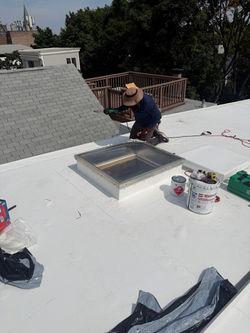 |  |  |
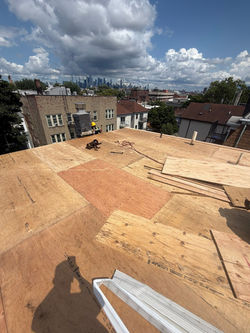
PROJECT LOCATION: The Heights, Jersey City, NJ
SYSTEM: White TPO
PROJECT TYPE: Full Roof Replacement
WORK INCLUDED: TPO • insulation • flashing • drainage details • penetrations
Does a TPO Roof Leak Mean It Needs to Be Replaced?
Not necessarily.
A roof leak can sometimes result from a localized condition rather than failure of the entire roofing system.
Potential repair areas may include:
-
Membrane damage
-
Seams
-
Wall flashings
-
Pipe penetrations
-
HVAC curbs
-
Roof drains
-
Scuppers
-
Perimeter details
-
Previous repairs
-
Areas damaged by rooftop activity or other trades
Whether repair is appropriate depends on the condition of the surrounding membrane and underlying roofing assembly.
Repeated patching may become less practical when a roof has widespread deterioration, trapped moisture, failing insulation, substrate problems or multiple system-wide deficiencies.
The objective of an inspection should be to determine whether the problem is localized or part of a larger roofing-system failure.
What Does Your Existing TPO Roof Actually Need?
Repair May Be Considered When:
-
The defect is localized
-
The surrounding roof remains serviceable
-
Membrane damage is limited
-
A specific flashing or detail can be corrected
-
There is no evidence of widespread system failure
Recover May Be Considered When:
-
The existing roofing assembly is suitable
-
Moisture conditions are acceptable
-
The substrate can support the proposed assembly
-
Compatibility requirements are satisfied
-
Applicable layer, code, and manufacturer requirements allow the proposed system
Replacement May Be Appropriate:
-
Deterioration is widespread
-
Wet or failed insulation is present
-
The deck or substrate requires substantial work
-
Existing roofing layers need to be removed
-
Multiple areas or components are failing
-
The existing assembly is no longer a suitable foundation for continued repair or recovery
The Takeaway
The appropriate scope cannot be determined by roof age alone. Existing conditions need to be evaluated.
Understanding What's Beneath an Existing TPO Roof
The visible membrane doesn't always reveal what is happening inside the roofing assembly.
Depending on the property and problem, Elite Roofing can evaluate an existing flat roof using methods such as:
Visual Roof Inspection
Evaluating membrane conditions, seams, flashings, drains, penetrations, perimeter details and visible deficiencies.
Core Sampling
Examining the roofing layers beneath the visible membrane when appropriate.
Infrared Moisture Testing
Helping identify areas that may require additional investigation for moisture beneath the roofing surface.
These diagnostic methods can provide additional information when determining whether a roof may be a candidate for repair, recovery, or replacement.
Maintaining a TPO Roofing System
Even a newly installed roof should not simply be ignored.
Regular roof observations and appropriate maintenance can help identify developing conditions before they become larger problems.
Areas worth monitoring include:
Drains & Scuppers
Keep drainage paths clear and watch for recurring ponding.
Heat-Welded Seams
Inspect visible seam conditions and transitions.
Flashings
Review walls, curbs, and other flashing conditions.
Penetrations
Monitor pipes, vents, equipment, and other roof openings.
Perimeters & Coping
Inspect roof edges, parapets, and metal conditions.
Membrane Surface
Look for punctures, cuts, damage, or unusual deterioration.
Previous Repairs
Monitor repaired areas and surrounding roofing.
Rooftop Activity
Check for damage following HVAC work, equipment installation, or work by other trades.
Frequently Asked Questions About TPO Roofing
Q: What does TPO stand for?
A: TPO stands for thermoplastic polyolefin. It is a single-ply roofing membrane commonly used on low-slope roofing systems.
Q: Are TPO roof seams glued together?
A: TPO is a thermoplastic membrane, and compatible membrane seams are typically joined through heat welding rather than the seam-tape approach commonly associated with EPDM.
Q: Is TPO roofing always white?
A: No. White is common because of its reflective properties, but TPO is available in other colors depending on the manufacturer and product line.
Q: What thickness does TPO come in?
A: Common standard products include 45, 60 and 80 mil membranes, although available thicknesses vary by manufacturer and product. GAF's current EverGuard TPO data sheet and Mule-Hide's Standard TPO specifications both list 45-, 60- and 80-mil options.
Q: Is 80-mil TPO better than 60-mil TPO?
A: It contains more membrane material, but membrane thickness is only one part of the roofing specification. The appropriate choice depends on the roof design, project requirements, rooftop conditions, manufacturer specifications and desired roofing assembly.
Q: Can TPO be fully adhered?
A: Yes. TPO systems can be designed in fully adhered configurations. Mechanically attached and other manufacturer-approved configurations are also available.
Q: Can TPO be installed over an existing roof?
A: Sometimes. A recover assembly may be possible depending on existing roofing layers, moisture conditions, substrate, compatibility, applicable requirements and manufacturer specifications. It should not be assumed that every existing roof is suitable for recovery.
Q: Can a TPO roof be repaired?
A: Yes, localized TPO repairs may be possible when the surrounding roofing system remains serviceable. The appropriate repair method depends on the membrane, damage, roof condition and manufacturer-compatible materials.
Q: Is TPO better than EPDM?
A: Neither membrane is universally better. TPO and EPDM have different material properties, seam technologies, surface characteristics and system configurations. The appropriate choice depends on the building and project.
Q: Is TPO only for commercial buildings?
A: No. Although TPO is widely associated with commercial roofing, it can also be used on multifamily, institutional and other appropriate low-slope properties.
TPO Roofing Throughout Hudson County, NJ
Elite Roofing installs, replaces, repairs, and maintains flat and low-slope roofing systems throughout Hudson County, including:
Jersey City • Hoboken • Bayonne • Union City • Weehawken • West New York • North Bergen • Guttenberg • Secaucus
In Jersey City, we work throughout neighborhoods including the Heights, Historic Downtown, Van Vorst Park, McGinley Square, Greenville, Bergen-Lafayette, Paulus Hook, and surrounding areas.
Our experience with Hudson County roofing includes residential properties, brownstones, row homes, multifamily buildings, condominium associations, mixed-use properties, and commercial buildings.
Considering TPO for Your Flat Roof?
The right roofing system starts with understanding the existing building.
Elite Roofing evaluates the roof membrane, underlying assembly, drainage, insulation, penetrations, flashings, rooftop conditions and property requirements before recommending an appropriate scope of work.
Whether you're dealing with an aging TPO roof, planning a complete flat roof replacement or comparing TPO with EPDM or modified bitumen, our team can help you understand the available options.
Not sure TPO is right for your building? → Compare All Flat Roofing Systems
Elite Roofing — Jersey City's Flat Roof Specialist
(201)436-1011