
Call Today For A Free Estimate!

A Small Company With a BIG Reputation Serving Hudson County for 40+ Years


Quality Is Not Expensive. It's Priceless!


EPDM Roofing Systems in Jersey City & Hudson County, NJ
Proven Rubber Roofing for Flat & Low-Slope Roofs

EPDM has been used on low-slope roofing systems for decades and remains a proven option for residential, multifamily and commercial flat-roof applications.
Commonly referred to as rubber roofing, EPDM is a flexible synthetic rubber membrane designed to withstand long-term exposure to changing temperatures, UV radiation, precipitation and other rooftop conditions.
At Elite Roofing, we install, replace, repair and maintain EPDM roofing systems throughout Jersey City and Hudson County. We evaluate the entire roof assembly—including the roof deck, insulation, drainage, penetrations, flashings and perimeter conditions—to determine whether EPDM is appropriate for the property.
Not sure EPDM is right for your property? → Compare All Flat Roofing Systems
EPDM Roofing at a Glance
SYNTHETIC RUBBER
Flexible single-ply roofing membrane
60 & 90 MIL
Common membrane thicknesses we work with
FULLY ADHERED
A common EPDM installation approach
38+ YEARS
ERA's current expected service-life figure for properly designed, installed and maintained EPDM membranes*
*Service life is not a warranty or guarantee. Actual performance varies by roof design, membrane, installation, drainage, exposure, maintenance and other conditions.
What Is an EPDM Roof?
EPDM stands for ethylene propylene diene terpolymer, a synthetic rubber material manufactured into large flexible sheets for use as a single-ply roofing membrane.
Unlike TPO, whose seams are typically joined through heat welding, EPDM roof seams are commonly joined using specially formulated tapes and adhesives. The membrane can be incorporated into several roof assembly designs, including fully adhered, mechanically attached and ballasted systems.
EPDM is available in different membrane thicknesses and configurations. Elite Roofing commonly works with 60-mil and 90-mil EPDM, with the appropriate specification depending on the roof design and project requirements.
Why is EPDM called a "rubber roof?"
Because EPDM is an elastomeric synthetic rubber membrane, property owners and contractors frequently refer to EPDM roofs simply as rubber roofs.
But the visible rubber membrane is only one part of a properly designed roofing assembly.
Depending on the property, an EPDM roof may also incorporate:
Roof Deck → Vapor/Air Control Components (where required) → Insulation → Cover Board (where specified) → EPDM Membrane → Seams & Flashings → Perimeter Details
That distinction is important because the long-term performance of an EPDM roof depends on much more than the membrane itself.
The membrane is only part of the system.
A successful EPDM installation also depends on properly addressing:
Drains & Scuppers • Parapets • Pipe Penetrations • Roof Hatches • Skylights • HVAC Curbs • Coping & Edges • Wall Flashings
60-Mil vs. 90-Mil EPDM
Not every EPDM roof requires the same membrane thickness. Two common specifications are 60-mil and 90-mil EPDM.
The 50% figure is simply the difference in nominal membrane thickness—not a claim that a 90-mil roof lasts 50% longer.
Mule-Hide currently offers standard EPDM in 45-, 60- and 90-mil configurations and says its standard product is most often installed as a fully adhered system.
Advantages of EPDM Roofing
PROVEN LONG-TERM PERFORMANCE
EPDM has decades of field history in low-slope roofing. Current ERA research places expected service life for properly designed, installed and maintained EPDM membranes at 38 years, with many older installations continuing beyond that point.
FLEXIBILITY
EPDM is elastomeric—it can stretch and recover its shape. That flexibility helps the membrane accommodate movement and temperature changes within a properly designed roof assembly.
LARGE MEMBRANE SHEETS
EPDM is manufactured in large sheets, which can reduce the number of field seams required on appropriately configured roofs. ERA notes sheets can be manufactured in widths up to 50 feet.
REPAIRABILITY
Properly identified EPDM roofing can often be repaired using compatible EPDM materials and detailing methods when the surrounding roof remains serviceable.
MULTIPLE SYSTEM CONFIGURATIONS
EPDM can be incorporated into fully adhered, mechanically attached and ballasted assemblies depending on manufacturer specifications and project conditions.
THICKNESS OPTIONS
Different membrane thicknesses and reinforced/non-reinforced products allow an EPDM system to be specified around project requirements rather than treating every roof identically.
Is EPDM Right for Every Flat Roof?
No—and we don't believe any roofing membrane should be presented as the universal solution for every building.
EPDM may not be the preferred system when the project's requirements favor another membrane or assembly.
Things we evaluate before recommending EPDM:
Rooftop Traffic
Frequent maintenance activity, equipment access, roof decks or other rooftop uses may require additional protection or a different assembly.
Existing Roof Conditions
Wet insulation, deteriorated decking or multiple failing roof layers can change the appropriate scope dramatically.
Drainage
Installing a new membrane does not automatically correct poor roof slope, undersized drainage or low areas.
Penetrations & Equipment
Pipes, curbs, skylights, hatches, drains and mechanical equipment increase the number of critical flashing details.
Surface Color / Building Goals
Traditional EPDM is black, although white EPDM products also exist. Reflectivity and building-energy objectives should be considered as part of system selection. White-on-black EPDM is available from manufacturers including Mule-Hide.
Building & Manufacturer Requirements
The roof assembly must ultimately satisfy applicable project specifications, code requirements and manufacturer requirements.
EPDM vs. another system?
Visit our Flat Roofing Systems guide to compare EPDM, TPO, Modified Bitumen, and Roof Coating/Restoration systems.
What Goes Into an EPDM Roof Installation?
A properly installed EPDM roof involves more than simply applying a new membrane. The existing roof, substrate, insulation, drainage and critical flashing details all need to be considered as part of the complete roofing assembly.
Fully Adhered EPDM Roofing
In a fully adhered EPDM system, the membrane is bonded to an approved substrate as part of the specified roof assembly.
Mule-Hide states its standard EPDM is most often installed fully adhered, while Carlisle notes that fully adhered EPDM provides high stability and uplift protection.
For many Hudson County properties, a fully adhered system can be particularly relevant where roof geometry includes numerous walls, penetrations, perimeter conditions, and other details.
EPDM Roofing in Hudson County's Urban Environment
Flat roofs throughout Jersey City and Hudson County are exposed to a combination of heavy rainfall, seasonal temperature changes, wind, rooftop equipment and dense urban building conditions. These factors can influence roof design, drainage, flashing details and long-term performance.
Local experience matters.
Jersey City alone includes everything from historic row houses and brownstones to multifamily buildings, condominiums, warehouses and larger commercial roofs. The same EPDM specification is not automatically appropriate for all of them.
Elite Roofing evaluates the actual property before recommending the roof assembly.
How Long Can an EPDM Roof Last?
The EPDM Roofing Association announced the figure in March 2026 following its review of laboratory research, field-aged materials and a survey of 569 roofing professionals. ERA reported that many professionals have encountered EPDM installations still performing at 40, 45 and even 50 years.
This does not mean every EPDM roof will last 38 years.
Actual roof life can be affected by:
Design • Installation • Membrane Thickness • Drainage • Flashing Details • Rooftop Traffic • Exposure • Maintenance • Substrate Conditions • Damage • Alterations by Other Trades
EPDM Roofing Projects by Elite Roofing
 |  |  |  |
|---|---|---|---|
 |  |  |  |
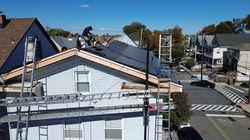 |  |  |  |
PROJECT LOCATION: Constable Hook, Bayonne, NJ
SYSTEM: 60-Mil Fully Adhered EPDM
PROJECT TYPE: Full Roof Replacement
WORK INCLUDED: EPDM membrane • insulation • flashing • drainage details • penetrations
Can an Existing EPDM Roof Be Repaired?
Sometimes.
A leak does not automatically mean an EPDM roof requires complete replacement. Depending on the age and overall condition of the system, localized repairs may be possible.
Potential repair areas include:
Seams • Flashings • Penetrations • Drains • Scuppers • Perimeter Details • Membrane Damage • Previous Repairs
However, repeatedly patching isolated areas may not be appropriate when the larger roof assembly has widespread deterioration, trapped moisture, failing insulation or substrate problems.
The goal of an inspection is to determine whether the problem is localized—or symptomatic of a larger roofing failure.
Does Your EPDM Roof Need Repair, Recovery or Replacement?
REPAIR
May be considered when:
-
Localized defect
-
Roof otherwise serviceable
-
Limited membrane damage
-
Repairable flashing/detail condition
-
No evidence of widespread failure
RECOVER
May be considered when:
-
Existing assembly is suitable
-
Moisture conditions are acceptable
-
Substrate can support the proposed system
-
Layer/code/manufacturer requirements allow it
REPLACE
May be appropriate when:
-
Widespread deterioration exists
-
Wet or failed insulation is present
-
Deck/substrate requires substantial work
-
Multiple roof layers must be removed
-
Roof assembly has reached the end of useful service
The correct approach cannot be determined from roof age alone. Inspection and, where appropriate, diagnostic testing can provide additional information about the existing assembly.
Understanding What's Beneath an Existing Flat Roof
Sometimes the visible membrane doesn't tell the entire story.
Elite Roofing can perform additional diagnostics when appropriate.
VISUAL ROOF INSPECTION
Evaluation of visible membrane, seams, flashings, penetrations, drainage and other roof conditions.
CORE SAMPLE
A small roof opening can provide information about the existing roof layers and underlying assembly.
INFRARED MOISTURE TESTING
Under suitable weather and roof conditions, infrared testing may help identify temperature anomalies that warrant further investigation for possible moisture beneath the visible membrane.
Understanding What's Beneath an Existing Flat Roof
Maintaining an EPDM Roof
Even a durable membrane benefits from periodic inspection.
An EPDM maintenance visit may include checking:
Drains & Gutters
Remove debris and verify drainage pathways remain open.
Seams & Flashings
Look for deterioration, separation or damage.
Penetrations
Inspect pipes, curbs, vents and other roof openings.
Perimeters & Coping
Check exposed edge and wall conditions.
Membrane Surface
Look for cuts, punctures, damage or unusual wear.
Previous Repairs
Evaluate older repair areas for continued performance.
EPDM Roofing FAQs
Q: Is EPDM the same thing as a rubber roof?
A: EPDM is a synthetic rubber roofing membrane, which is why EPDM roofing is commonly referred to as rubber roofing.
Q: How thick is EPDM roofing?
A: EPDM roofing membranes are manufactured in several thicknesses. Elite Roofing commonly works with 60-mil and 90-mil EPDM depending on the project and roof-system requirements. Industry products are also available in other thicknesses.
Q: How long does an EPDM roof last?
A: There is no guaranteed lifespan that applies to every roof. In 2026, the EPDM Roofing Association announced an expected service life of at least 38 years for properly designed, installed and maintained EPDM membranes based on its review of field experience and research. Actual performance depends on the complete roof assembly and conditions.
Q: Is EPDM only available in black?
A: No. Traditional EPDM is commonly associated with black membranes, but white EPDM products are also manufactured.
Q: Are EPDM seams heat-welded?
A: EPDM is a thermoset membrane rather than a thermoplastic membrane such as TPO. EPDM seams are commonly completed using compatible seam tapes and adhesives rather than hot-air welding.
Q: Can EPDM roofing be repaired?
A: Often, yes. Localized EPDM damage, flashing conditions or seam-related problems may be repairable when the surrounding roof remains in serviceable condition.
Q: Can EPDM be installed over an existing roof?
A: In some circumstances, a recover system may be possible. Existing layers, moisture, substrate condition, compatibility, code requirements and manufacturer specifications must first be considered.
Q: Can you install a roof deck over EPDM?
A: Roof decks and walking surfaces require a properly designed assembly that protects the underlying roofing membrane and maintains drainage. The deck system should not simply be placed over an EPDM membrane without considering protection, support, drainage and future roof access.
EPDM Roofing Throughout Hudson County, NJ
Elite Roofing installs and services flat and low-slope roofing systems throughout our Hudson County service area, including:
Jersey City: Serving properties throughout The Heights, Historic Downtown, Van Vorst Park, McGinley Square, Greenville, Bergen-Lafayette, Paulus Hook, and surrounding neighborhoods.
Hoboken • Bayonne • Union City • Weehawken • West New York • North Bergen • Guttenberg • Secaucus
Considering EPDM for Your Flat Roof?
The right roofing system starts with understanding the existing building.
Elite Roofing evaluates the roof membrane, underlying assembly, drainage, penetrations, flashings and property conditions before recommending an appropriate scope of work.
Whether you're dealing with an aging rubber roof, planning a complete flat roof replacement, or comparing EPDM with another roofing system, our team can help you understand the available options.
Elite Roofing — Jersey City's Flat Roof Specialist
(201)436-1011